

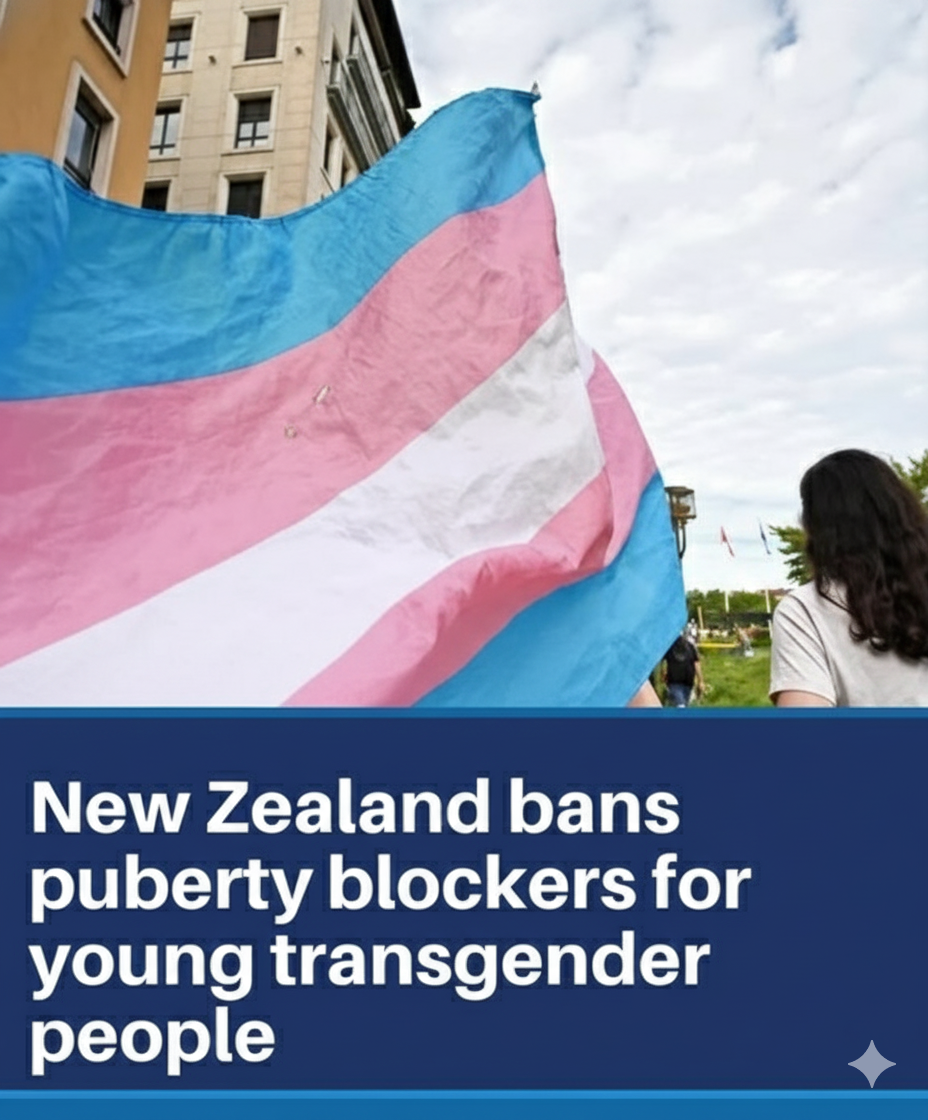
🚨 New Zealand Bans Puberty Blockers for Young Transgender People: The Devastating Consequences for Gender-Affirming Care
A deep analysis of the international anti-trans trend and the necessity of safe, informed choices.
Tags: New Zealand Puberty Blockers, Ban Transgender Youth, Gender-Affirming Care, Trans Healthcare New Zealand, LGBTQIA+ Rights, Healthcare Autonomy, Mental Health Trans Youth.
The recent decision by New Zealand to prohibit the use of puberty blockers (GnRH agonists) for young transgender people marks a distressing shift in the global approach to gender-affirming care. This news, which is causing global commotion, is seen by critics as a direct attack on the autonomy and mental health of vulnerable young trans individuals. The measure places politics above the medical expertise of doctors and therapists.
The ban, fueled by a growing international lobby against trans rights, creates immediate danger. Puberty blockers are medically recognized as a life-saving, reversible "pause button" that gives youth the necessary time to make well-considered decisions, along with their family and healthcare providers, about their further gender-affirming treatment.
The Medical Reality: The Absolute Necessity of Puberty Blockers
To fully understand the impact of this New Zealand ban, we must clearly explain the function of puberty blockers. The medication is needed to lift a lifelong, unnecessary burden from the shoulders of transgender youth.
A Reversible "Pause Button" for Reflection
Puberty blockers are not hormones. They are medications that temporarily halt the release of sex hormones (testosterone or estrogen) from the brain. The main, life-saving characteristics are:
- Completely Reversible: Once the medication is stopped, natural puberty resumes immediately. There is no permanent change to the body.
- Creating Time for Reflection: They provide young people and their families a crucial period of reflection. This 'pause button' gives the adolescent time to explore their gender identity (in close consultation with medical professionals) without the increasing anxiety over unwanted physical development.
- Preventing Irreversible Characteristics: For transgender girls and trans-feminine youth, puberty blockers prevent the development of permanent male characteristics, such as voice deepening, the growth of an Adam's apple, and unwanted jaw and body shape development. Surgically correcting these features later is complex, expensive, and often incomplete.
- Stress Relief: By removing the stress of an unwanted puberty, young people can focus on school, social development, and their mental health.
Banning this 'pause button' forces young people into a permanent, unwanted physical development that later requires much more expensive and invasive medical procedures (such as surgery) to undo. Puberty blockers are a way to avoid later, irreversible interventions.
The Devastating Impact on Mental Health
Scientific research is clear on this: access to gender-affirming care is directly linked to the well-being of transgender youth.
Autonomy and the Gender Dysphoria Crisis
For a young person with severe gender dysphoria, witnessing a body developing in conflict with their identity can lead to a crisis.
- Higher Suicide Risk: Studies show that trans youth denied access to blockers face a significantly higher risk of suicide and severe depression.
- No Treatment is Also a Choice: By banning this medical option, a decision is effectively being made on behalf of the young person: specifically, the choice to proceed with a puberty that is detrimental to their well-being.
- Ethical Responsibility: Major medical organizations worldwide, including the WPATH, support this care as a medical necessity, not as an experimental procedure. The New Zealand ban contradicts this broad professional consensus.
New Zealand as Part of a Global Anti-Trans Trend
New Zealand's decision is not isolated. It is part of a broader, politically driven trend that seeks to restrict medical care for trans individuals.
Parallels Abroad
Similar restrictions and debates are taking place in:
- The United States: Numerous states have passed laws actively prohibiting gender-affirming care for minors (sometimes even adults).
- The United Kingdom: Recent medical reviews have led to more concentrated and restricted access to this care, causing long waiting times and uncertainty.
This movement is often fueled by misinformation and political lobby groups that ignore medical consensus to wage a culture war.
The Necessity of Safe Digital Havens (The Call)
When physical governments undermine the rights and safety of transgender youth, the need for safe, online communities becomes greater than ever. These youth — the digital refugees — need a place where they can:
- Share information without censorship.
- Find emotional support from peers and allies.
- Feel safe, far from the hate that grows online and offline.
This is the moment when the global LGBTQIA+ community must come together, both online and offline. We must amplify the voices of trans youth and their families and stress that medical decisions belong with the patient, the family, and the doctor, not with politicians.
🔥 Raise Your Voice & Find Support. 🔥
Now that the physical safety of our youth is under threat, community is more important than ever. Find a safe space where you are heard, without censorship.
👉 FIND YOUR SAFE SPACE HERE 🌈
Founder & author at PrideHives — your global LGBTQIA+ community.
Connecting voices. Empowering stories. Celebrating identity. 🌈
PrideHives.com – The international LGBTQIA+ social platform.
A safe, vibrant and inclusive space to connect, express and belong.
Join today: PrideHives.com

 English
 Arabic
 French
 Spanish
 Portuguese
 Deutsch
 Turkish
 Dutch
Dutch
 Russian
 Romaian
 Portuguese (Brazil)
 Greek
Greek